Together, we solve the challenges of tomorrow.
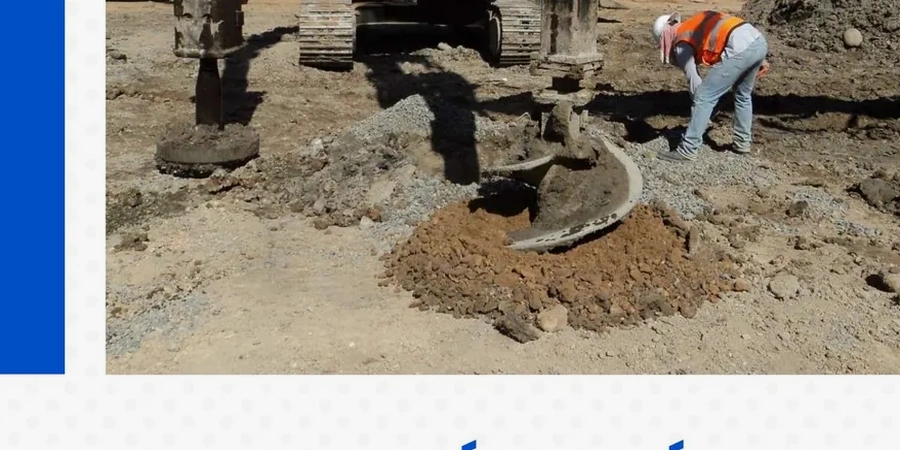
LEARN MORE →Ground improvement in Boston encompasses a suite of geotechnical techniques designed to enhance the engineering properties of soil and fill materials, enabling safe and economical construction across the city's challenging terrain. From the Back Bay to the Seaport District, much of Boston is underlain by artificial fill, marine clays, and organic deposits that are prone to excessive settlement, low bearing capacity, and liquefaction. These subsurface conditions demand rigorous ground modification strategies to support everything from high-rise foundations to infrastructure networks. The category covers methods such as stone column design, deep soil mixing, compaction grouting, and rigid inclusions, each selected based on site-specific geotechnical data and project performance criteria.
Boston's geologic history is dominated by glacial activity and subsequent marine inundation, leaving behind a complex stratigraphy of till, outwash, and the infamous Boston Blue Clay. Much of the downtown and waterfront areas sit on thick sequences of this moderately overconsolidated clay, which can consolidate significantly under load. Additionally, large portions of the city were created through land reclamation in the 19th and early 20th centuries, resulting in heterogeneous fills containing rubble, timber piles, and debris. These fills are often loose and susceptible to dynamic compaction or require reinforcement through vibrocompaction design to mitigate settlement and improve seismic performance. Understanding this local geology is essential for selecting appropriate ground improvement technologies that address both static and seismic demands.
Regulatory compliance in Boston is shaped primarily by the Massachusetts State Building Code, 9th Edition (780 CMR), which adopts and amends the International Building Code (IBC) with local provisions. Chapter 18 of the code governs soils and foundations, requiring geotechnical investigations in accordance with accepted standards and often referencing guidelines from the American Society of Civil Engineers (ASCE) and the Federal Highway Administration (FHWA). For ground improvement projects, designers must adhere to the Massachusetts Amendments to the IBC, which may impose stricter requirements for seismic site classification and liquefaction assessment due to the region's moderate seismicity. Additionally, the Boston Groundwater Trust's regulations on groundwater recharge and the Boston Zoning Code's Article 80 review process for large projects often influence the selection and permitting of ground improvement methods, particularly in areas with sensitive groundwater levels or historic structures.
The types of projects requiring ground improvement in Boston are diverse and growing as the city densifies. Urban high-rise developments on filled land routinely use rigid inclusions or controlled modulus columns to transfer loads through compressible layers to competent bearing strata. Infrastructure projects such as the extension of the Silver Line or the redevelopment of Logan Airport terminals have relied on deep mixing and jet grouting to stabilize excavations and control groundwater. Historic building renovations, like those in the Bulfinch Triangle, often require underpinning and compensation grouting to protect adjacent structures. Seismic retrofitting of bridges and waterfront facilities also employs stone columns and dynamic compaction to reduce liquefaction risk. Each application demands a tailored design approach that integrates field testing, numerical modeling, and performance verification, ensuring that the improved ground meets serviceability and safety requirements for decades to come.
Ground improvement refers to the modification of soil or fill properties to increase bearing capacity, reduce settlement, or mitigate liquefaction. In Boston, it is typically required when building on the city's widespread artificial fills, compressible Boston Blue Clay, or loose alluvial deposits that cannot support structural loads in their natural state, especially for mid-rise and high-rise structures or critical infrastructure.
The Massachusetts State Building Code (780 CMR), specifically Chapter 18 on soils and foundations, is the primary regulation. It incorporates IBC standards with local amendments. Additional oversight comes from the Boston Groundwater Trust for recharge requirements and the Boston Zoning Code's Article 80 for large-project environmental and geotechnical review.
Boston's subsurface typically includes layers of fill, organic silt, and Boston Blue Clay over glacial till. Soft clays dictate methods like prefabricated vertical drains with surcharging or rigid inclusions, while loose granular fills are better suited to vibrocompaction or stone columns. The presence of buried timber piles or debris often requires pre-drilling or specialized mixing tools to avoid obstructions.
Although Boston's seismicity is moderate, performance criteria focus on controlling total and differential settlement under static loads and preventing liquefaction-induced failures. Designs must meet Massachusetts amendments to IBC seismic provisions, often requiring post-improvement verification through cone penetration testing or shear wave velocity measurements to confirm adequate densification and drainage.