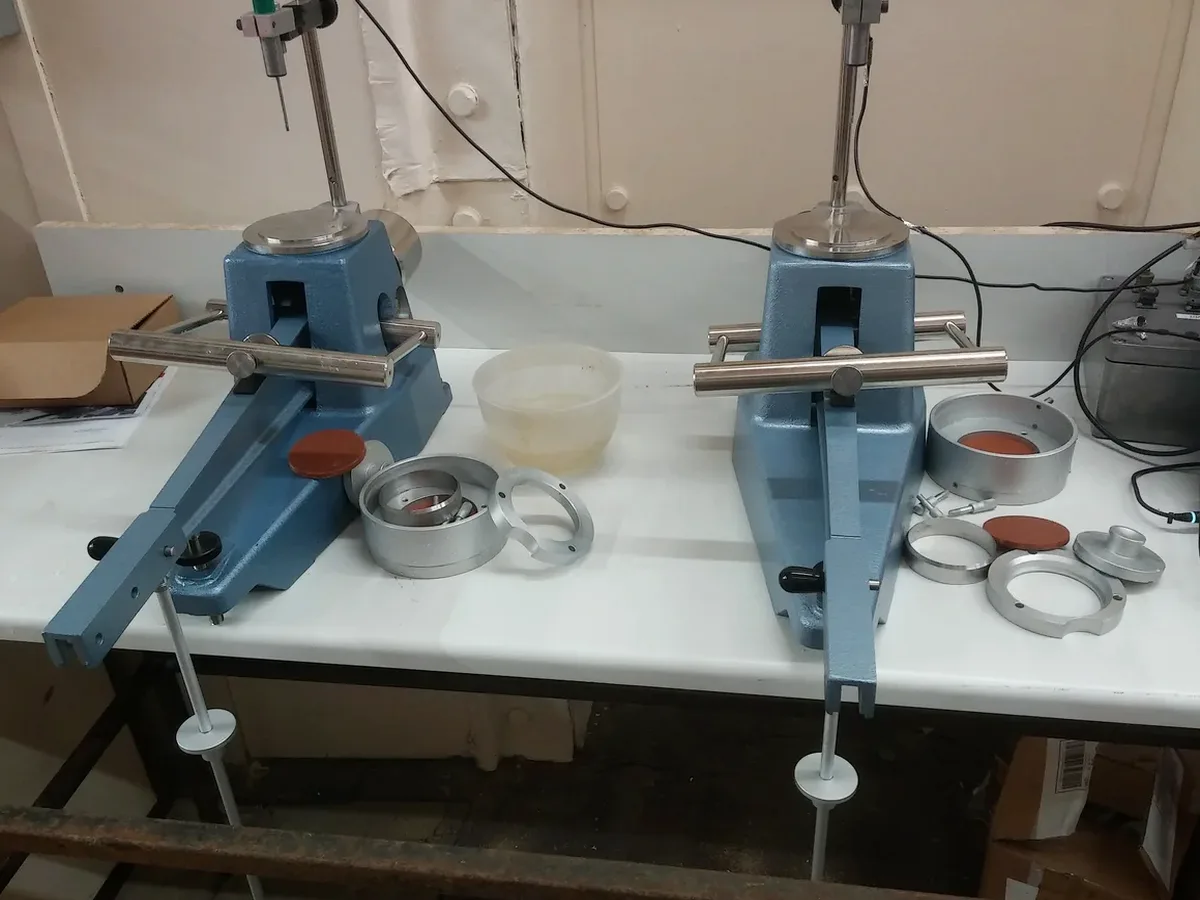
Laboratory testing forms the analytical backbone of geotechnical engineering in Boston, encompassing a suite of standardized procedures designed to quantify the physical, mechanical, and chemical properties of soils and rocks. This category covers everything from basic index tests that classify materials to advanced strength and consolidation evaluations, all performed under controlled conditions to ensure data reliability. In a city where subsurface conditions can vary dramatically across short distances, laboratory data provides the essential link between field exploration and safe, economical design. Without rigorous lab work, engineers would be forced to rely on assumptions that could compromise foundation performance, excavation safety, or long-term durability of infrastructure.
Boston's geology presents unique challenges that make laboratory testing particularly critical. Much of the city is underlain by glacial deposits including dense till, marine clays, and outwash sands, remnants of the Laurentide Ice Sheet's advance and retreat. The famed Boston Blue Clay, a lightly overconsolidated marine clay, dominates many low-lying areas and exhibits sensitivity and creep behavior that demand precise classification through tests like Atterberg limits. Fill materials, often containing brick fragments, ash, and historic debris, blanket older neighborhoods and require careful gradation analysis. Understanding these materials in the lab allows engineers to predict settlement, assess liquefaction potential, and design appropriate foundations for the region's characteristic mix of historic and modern structures.
Geotechnical laboratory work in Massachusetts must comply with a framework of standards that includes ASTM International methods, AASHTO protocols for transportation projects, and specific requirements from agencies like the Massachusetts Department of Transportation (MassDOT) and the Boston Planning & Development Agency. MassDOT's Standard Specifications for Highways and Bridges, along with its supplemental guidelines, dictate testing frequencies and methodologies for public works. Building code compliance, following the Massachusetts State Building Code (780 CMR) which incorporates the International Building Code, often mandates laboratory verification of bearing capacity and fill compaction. These regulations ensure that testing produces defensible results suitable for permitting and design, particularly in a city with aggressive groundwater and potential for contaminated soils.
The range of projects requiring comprehensive laboratory testing in Boston spans from deep excavations for high-rise foundations in the Seaport District to utility installations in the dense urban core and rehabilitation of century-old infrastructure. A proper grain size analysis (sieve + hydrometer) becomes indispensable when evaluating borrow sources for engineered fills or assessing the drainage characteristics of subgrade soils beneath roadways. For projects involving excavations in Boston Blue Clay, laboratory consolidation and triaxial shear tests inform critical decisions about shoring systems and ground movement predictions. Even smaller-scale residential additions in neighborhoods like South Boston or Dorchester benefit from index testing to confirm soil bearing assumptions and avoid costly surprises during construction.
Turnaround varies by test complexity and lab workload. Basic index tests like moisture content or Atterberg limits can be completed within 3-5 business days. Consolidation and triaxial shear tests require longer, typically 1-3 weeks due to specimen preparation and staged loading. Expedited services are often available for time-sensitive projects, but scheduling in advance is recommended given Boston's active construction market.
Key ASTM standards include D422 for particle-size analysis, D4318 for Atterberg limits, and D2487 for the Unified Soil Classification System. MassDOT projects may also invoke AASHTO T 88 and T 89. Boston-specific building code requirements typically reference these ASTM methods, ensuring consistency across commercial, residential, and infrastructure applications.
Massachusetts Contingency Plan (310 CMR 40.0000) regulations often require coordination between geotechnical and environmental testing. Soils in former industrial areas or filled land may need chemical analysis alongside physical testing. Labs must follow chain-of-custody protocols and may need Massachusetts DEP certification for certain analyses, especially when characterizing material for off-site disposal or reuse.
Cost depends on the number and type of tests, soil matrix complexity, and required reporting detail. Basic index testing is relatively economical, while specialized strength or consolidation suites represent a larger investment. Sample condition, presence of coarse particles, and need for undisturbed specimen preparation also affect pricing. A clear scope aligned with design objectives ensures a cost-effective program without unnecessary testing.