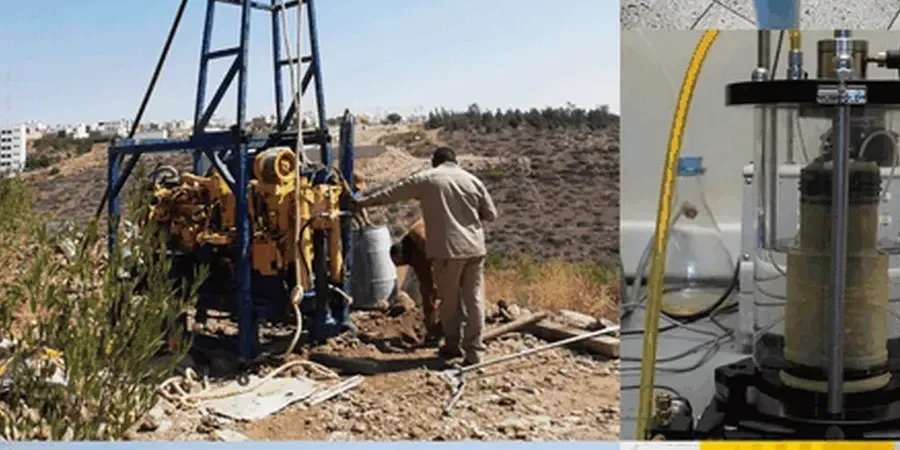
You'd be surprised how often a Boston construction site gets shut down because someone skipped the ground improvement study. The fill is loose, the water table is high, and the excavator hits refusal six feet down. That's exactly the problem we solve with vibrocompaction design. Our team models the vibratory probe spacing and energy needed to densify the ground before you pour a foundation. Boston's geology includes extensive artificial fill from the 19th century — the Back Bay and South Boston were literally created by filling tidal flats with gravel, sand, and debris. Without proper stone columns or vibro techniques, that fill settles unevenly and creates differential movement across the slab. If the site is in a lower-lying area near the Charles River, we often recommend complementary liquefaction assessment to confirm the seismic demand on the treated ground.
Boston's 19th-century fill can settle three inches in a decade if you don't densify it first — vibrocompaction design makes that settlement negligible before the structure goes up.
Questions and answers
What does vibrocompaction design cost for a typical Boston site?
For a standard single-lot job in the Boston area, the vibrocompaction design package — including pre-treatment CPT data review, grid layout, specification writing, and post-treatment verification report — runs between US$1,520 and US$5,240 depending on the treatment area and depth. Larger multi-building developments with complex fill profiles fall at the upper end of that range.
How long does the design phase take before the contractor can mobilize?
With existing CPT and SPT data in hand, we turn around the compaction grid and spec in four to six business days. If we need to arrange the pre-treatment testing first, add a week for field work and lab classification. Boston's permitting doesn't usually hold up a vibrocompaction design unless the site is in a historic district with vibration monitoring requirements.
Can vibrocompaction work next to existing buildings in Boston?
Yes, but it requires a vibration monitoring plan and a careful review of adjacent foundation types. We set peak particle velocity limits — typically 0.5 in/sec for unreinforced masonry on Beacon Hill, 1.0 in/sec for modern concrete structures — and specify the compaction sequence to push the vibrator away from the sensitive structure. Pre-condition surveys of neighboring properties are standard practice in our Boston projects.