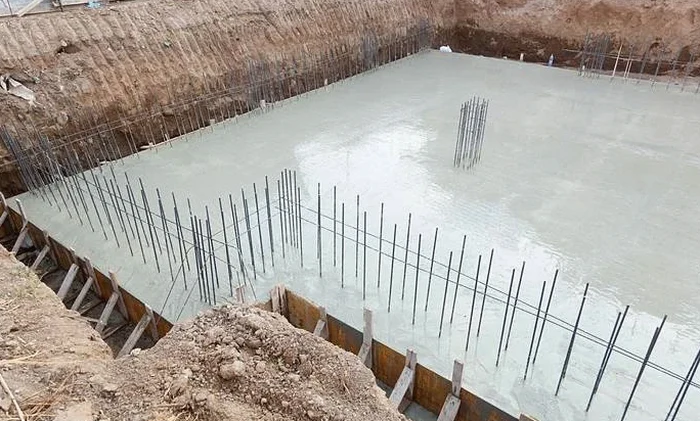
A developer in the Seaport District recently broke ground on a mixed-use project where the original plan called for a deep pile system, only to discover that a well-designed mat foundation over compacted urban fill could handle the structural loads at a fraction of the installation time. That kind of field-level re-evaluation is what drives our approach to shallow foundation design in Boston, where the subsurface rarely matches the textbook. From the clay layers of Back Bay to the glacial till in Cambridge, each site demands a bearing capacity analysis that reflects real stratigraphy rather than generic assumptions. We pair in-situ test pits with laboratory index testing to characterize the upper soil profile before sizing footings, because Boston's made land and historic fill zones have a way of surprising even experienced contractors. The design process integrates allowable settlement limits, frost protection per IBC Section 1805, and constructability constraints that matter when you are working between century-old utility lines and narrow downtown lots. Getting the foundation right the first time avoids costly change orders and keeps the project schedule intact, which is what every owner and structural engineer ultimately needs.
A shallow foundation is only as reliable as the subgrade inspection that confirms the design assumptions before the first concrete pour.
Site-specific factors
The most common mistake we see on Boston job sites is assuming that the bearing stratum is uniform across the entire excavation when old seawalls, buried timber piles, or abrupt changes in fill composition are actually present just a few feet apart. A footing sized for 3,000 psf on one corner of the building can end up bearing on loose ash or organic silt at the opposite corner, producing differential settlement that cracks partition walls and binds elevator rails before the certificate of occupancy is even issued. Overexcavation and replacement with engineered fill solves many of these problems, but only if the limits of unsuitable material are mapped accurately during subgrade inspection. We recommend test pit or CPT soundings at every column line on sites with known fill history, because the cost of exploration is trivial compared to the remedial underpinning that becomes necessary once the superstructure is in place. Frost heave in shallow footings is another risk that is sometimes underestimated by out-of-state designers who are not familiar with the 48-inch frost depth required under the Massachusetts building code.
Questions and answers
How much does a shallow foundation design cost for a Boston project?
For a typical single-family or small commercial building in the Boston area, the geotechnical investigation and foundation design report ranges from US$2,030 to US$3,130, depending on the number of borings or test pits required and whether laboratory consolidation or triaxial testing is needed. Complex sites with deep fill or variable stratigraphy fall at the upper end of the range because the analysis requires more cross-sections and settlement calculations.
What depth do footings need to be in Boston to avoid frost heave?
The Massachusetts State Building Code (780 CMR) requires a minimum footing depth of 48 inches below finished grade for frost protection, unless the structure is heated year-round and the footing is insulated per the code's alternative provisions. On sites where bedrock is shallower than 48 inches, we design the footing to bear directly on cleaned rock with lateral restraint against frost jacking.
Can I use a mat foundation instead of deep piles on Boston Blue Clay?
In many cases, yes. A mat foundation spreads the structural load over a large area, reducing the bearing pressure to a level that Boston Blue Clay can support without excessive settlement. The decision depends on the clay's undrained shear strength, the total building load, and the sensitivity of the structure to differential movement. We run a detailed settlement analysis before recommending a mat over a deep foundation system.
What happens if the subgrade conditions are worse than the borings showed?
If the excavation reveals softer zones, old fill pockets, or buried debris that the borings did not catch, we stop work in that area and perform additional probing to map the extent of the unsuitable material. The typical remedy is overexcavation down to competent soil followed by replacement with compacted crushed stone or engineered fill, with compaction testing to document the repair before the footing is poured.