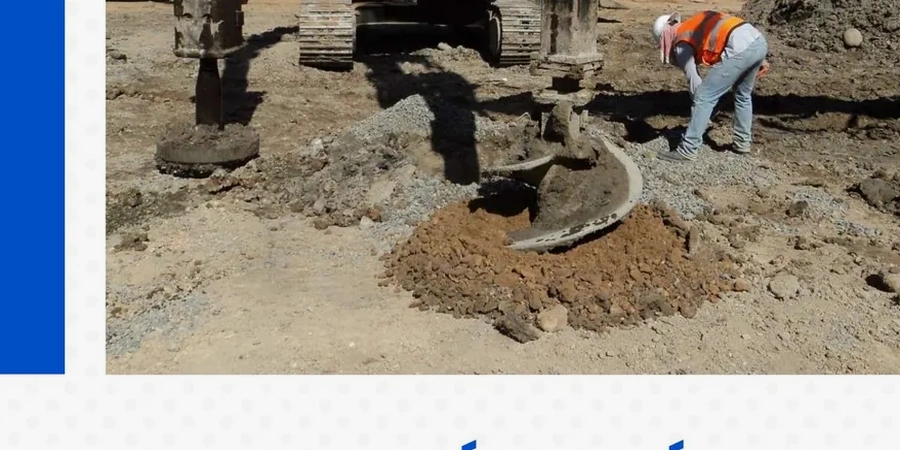
Boston sits on some of the most challenging urban geology in the Northeast. The downtown area and Back Bay are built on filled land over compressible marine clays. Further out, glacial till and outwash deposits dominate. Many sites need ground improvement before structural loads can be applied. That's where stone column design becomes critical. We combine site-specific CPT and SPT data with advanced modeling to size, space, and install stone columns correctly. Boston's high water table and proximity to historic structures add complexity. A generic approach won't work here. Our team has tackled dozens of Boston projects, from Seaport high-rises to renovations in Cambridge, always adapting the stone column layout to the real stratigraphy. We often pair this with liquefaction assessment when the project triggers seismic design requirements under the current Massachusetts State Building Code.
In Boston's marine clays, a well-designed stone column grid can cut settlement by half and accelerate consolidation from years to weeks.
Questions and answers
How much does stone column design cost for a Boston project?
Design fees typically range from US$1,410 to US$5,830 depending on site size, number of column locations, and the complexity of the soil profile. A small residential addition on a single lot falls at the lower end. A multi-story commercial building in the Seaport with complex layering and seismic requirements will be at the higher end. The fee covers the design report, stamped calculations, and one round of review with the geotechnical engineer.
How long does it take to prepare a stone column design?
A standard design package takes about 10 to 14 business days after we receive the complete geotechnical investigation report. Complex sites requiring 3D finite element modeling or multiple iterations with the structural engineer may take up to three weeks.
What soil information do you need to start the design?
We need a recent geotechnical report with SPT N-values or CPT tip resistance and sleeve friction, laboratory consolidation data on undisturbed samples of the compressible layers, groundwater level readings, and the proposed foundation loads and column layout from the structural engineer. Undisturbed Shelby tube samples of the clay are ideal for accurate settlement predictions.
Are stone columns effective against liquefaction in Boston?
Yes, properly designed stone columns can reduce liquefaction risk by densifying loose granular layers and providing drainage paths for excess pore pressure. We evaluate the factor of safety against liquefaction using SPT-based or CPT-based methods per Youd and Idriss (2001) and design the column grid to achieve the required improvement ratio.