Together, we solve the challenges of tomorrow.
LEARN MORE →In-situ testing forms the backbone of geotechnical site characterization in Boston, encompassing a range of field methods that evaluate soil and rock properties directly in their natural state without disturbing the sample's structural integrity. This category covers essential techniques from penetration testing and shear strength assessment to density measurement and groundwater evaluation, all performed on location to capture the true behavior of the subsurface materials. For engineers and contractors working in the Greater Boston area, these tests provide critical data that laboratory analysis alone cannot replicate, as they account for in-place stresses, fabric, and moisture conditions that govern foundation performance.
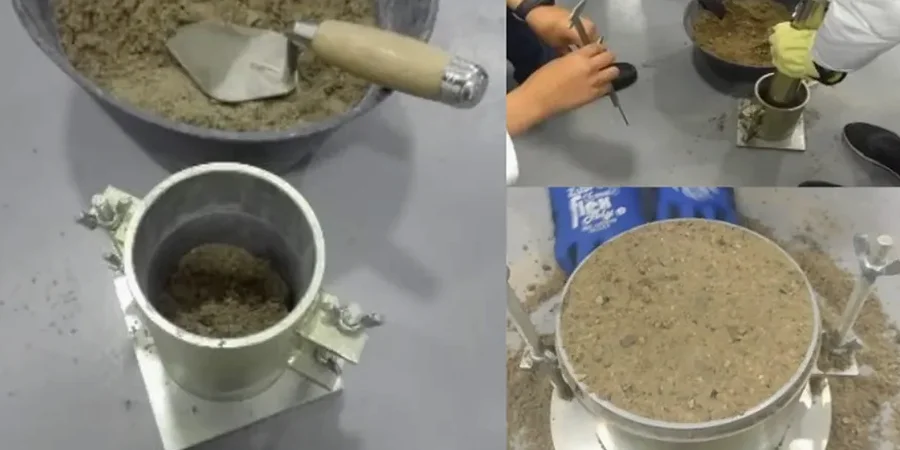
Boston's unique geological setting demands a rigorous approach to field testing. The region sits on a complex tapestry of glacial deposits, including the infamous Boston Blue Clay—a moderately overconsolidated marine clay with low permeability and high compressibility. Beneath much of the downtown and Back Bay areas, this formation presents significant settlement and stability challenges. Overlying the clay, glacial till and outwash sands create variable bearing conditions, while the bedrock surface of Cambridge Argillite and Roxbury Conglomerate can plunge dramatically across short distances. A thorough field density test (sand cone method) often becomes indispensable when characterizing these granular fills and compacted layers that cap the compressible clays below.
All in-situ testing conducted in Massachusetts must comply with the Massachusetts State Building Code (780 CMR), which adopts and amends the International Building Code with local provisions for geotechnical investigations. ASTM International standards govern most test procedures, with D1586 for Standard Penetration Tests, D5778 for Cone Penetration Tests, and D1556 for sand cone density measurements being particularly relevant. The Boston Groundwater Trust's monitoring requirements add another layer of scrutiny, especially for projects that may impact groundwater levels in the downtown basin. Adherence to these standards ensures that test results are defensible, comparable, and acceptable to local building officials and review boards.
Projects throughout Boston that routinely require comprehensive in-situ testing programs include high-rise developments on the clay deposits of the Financial District and Seaport, where deep foundations must transfer loads to bedrock through potentially thick compressible layers. Infrastructure work for the MBTA, particularly tunnel and station excavations, relies heavily on in-situ stress measurements and permeability testing to design support systems and dewatering schemes. Even smaller-scale projects like brownfield redevelopments in Somerville or Cambridge demand careful field characterization to address contamination pathways and variable fill materials. The field density test (sand cone method) proves especially valuable during earthwork and utility trench backfill verification across all these project types, ensuring compaction meets the strict specifications of Massachusetts Highway Department standards when applicable.
In-situ testing evaluates soil and rock properties directly in the ground without removing samples, preserving natural stresses, moisture, and fabric that laboratory tests can disturb. In Boston, where sensitive Boston Blue Clay and variable glacial deposits dominate, field tests like CPT and vane shear provide more reliable strength and compressibility data critical for foundation design on these challenging formations.
Standard Penetration Testing (SPT) remains widespread for its simplicity and correlation to local experience with Boston Blue Clay. Cone Penetration Testing (CPT) with pore pressure measurement has gained popularity in the Seaport and downtown for continuous profiling. Field vane shear testing is essential for assessing sensitive clay strengths, while pressuremeter tests provide deformation parameters for complex foundation analyses.
The Massachusetts State Building Code (780 CMR) requires geotechnical investigations to follow accepted standards, typically referencing ASTM procedures for each test method. Boston's specific amendments address groundwater monitoring and deep foundation design, mandating adequate field testing to characterize the Boston Blue Clay and bedrock interface. Reports must demonstrate compliance with these standards for permit approval.
In-situ permeability tests and piezometer installations are critical in Boston due to complex groundwater regimes in the filled and alluvial deposits overlying glacial materials. The Boston Groundwater Trust requires monitoring for projects that may affect the downtown groundwater table. Field pumping tests and packer tests in bedrock help design dewatering systems and predict inflow rates for deep excavations.