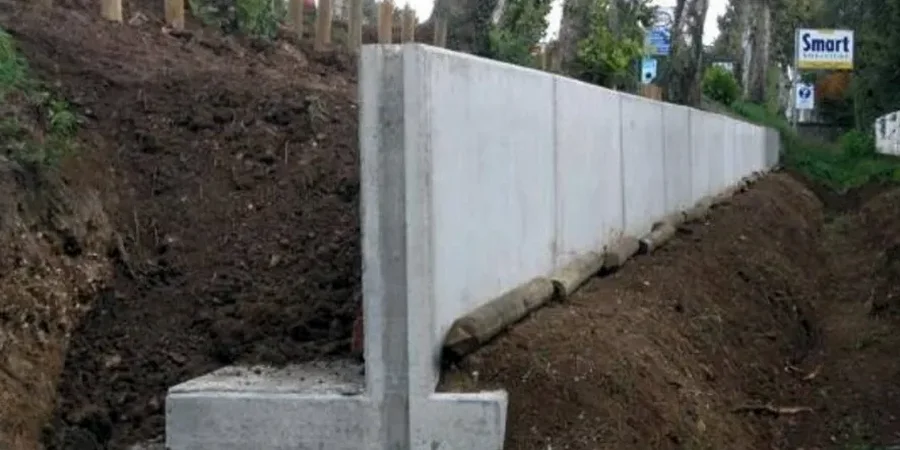
Boston's landscape didn't come easy. From the Back Bay infill in the 1850s to the Big Dig reshaping the central artery, nearly every square foot of the city has been cut, filled, or shored up at some point. That history lives beneath the surface—layers of urban fill, buried timber cribbing, and glacial till that make retaining wall design a task far beyond standard textbook solutions. We see it on every site: a soil profile that shifts from loose rubble to stiff Boston blue clay within meters. Getting the wall geometry right here means reading the ground like a detective. A test pit campaign often reveals old foundation remnants before the first structural line is drawn, and when cut heights exceed ten feet, integrating deep excavation monitoring keeps adjacent brownstones safe during construction.
Designing a retaining wall in Boston means engineering for a soil column that might hold 19th-century granite blocks just three feet below the footing excavation.
Questions and answers
What permits does a retaining wall require in Boston?
Any retaining wall over four feet in height typically requires a building permit from the City of Boston Inspectional Services Department (ISD). Walls supporting a surcharge or located near property lines will also need stamped engineering drawings. For walls on or near the waterfront, Chapter 91 licensing through MassDEP may apply.
How long does the design and approval process take?
For a standard residential or commercial retaining wall, our design package is usually complete within two to three weeks after receiving the geotechnical report. City permit review in Boston typically adds three to six weeks depending on the complexity and current ISD workload.
What does retaining wall design cost in Boston?
Engineering fees for retaining wall design in the Boston area generally range from US$940 for a straightforward residential gravity wall to around US$3,730 for a complex anchored soldier pile system with full structural calculations and construction-phase support.
Do you handle both temporary and permanent retaining walls?
Yes. We design temporary excavation support systems like soldier pile and lagging walls that are removed after construction, as well as permanent cast-in-place concrete, MSE, and segmental block walls intended for 50 to 75-year service life under Massachusetts building code requirements.
How do you verify the soil parameters used in wall design?
We rely on site-specific geotechnical investigation data—SPT borings, CPT soundings, and laboratory testing of undisturbed samples—rather than presumptive values. For Boston's variable fill and marine clay deposits, this in-situ verification is critical to achieving the required factors of safety without over-designing the wall section.