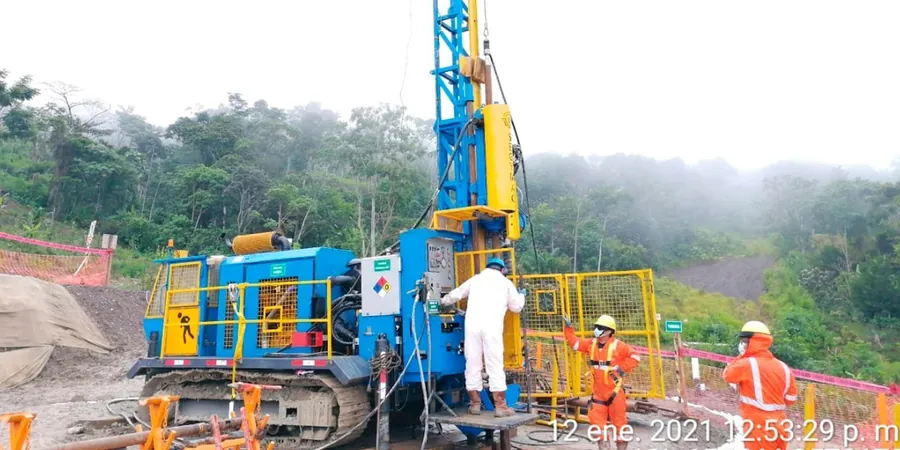
ASTM D1586 governs every SPT we run in Boston, and for good reason. The city sits on a layered glacial and marine profile that ranges from loose urban fill in the Back Bay to the notoriously sensitive Boston Blue Clay and deep glacial till. When the IBC and ASCE 7 require site-specific bearing capacity and liquefaction screening, the Standard Penetration Test remains the baseline investigation tool. Our team has executed SPT borings from the Seaport District to Roxbury puddingstone outcrops, correlating N-values with undrained shear strength in the clay and relative density in the granular outwash. For sites where fill thickness exceeds 15 feet, we often combine SPT sampling with test pits to visually confirm the composition of the man-made layer before foundation design begins.
Boston's SPT N-values don't just measure density — they tell you whether you're in marine clay, outwash, or till, and that changes the entire foundation strategy.
Site-specific factors
A deep excavation on Atlantic Avenue hit a pocket of loose urban fill over marine clay that had N-values of 2 to 4 down to 45 feet. The geotechnical report initially relied on borings spaced 100 feet apart and missed the lens entirely. When the adjacent slurry wall showed unexpected deflection, the contractor had to re-evaluate the lateral earth pressures and install additional tiebacks. In Boston, where historic shorelines were filled with debris, ash, and dredged material, SPT spacing matters more than the code minimum suggests. A tight grid of properly executed borings with accurate blow counts and sample recovery logs is what separates a predictable excavation from a costly stabilization event. We also run liquefaction screening using the NCEER/Youd-Idriss method when sands are present below the water table.
Questions and answers
What does an SPT test typically cost in the Boston area?
For a standard SPT boring program in Boston, expect to budget between US$620 and US$710 per borehole for straightforward access conditions. Tight urban sites with limited drill rig clearance, MEPA permits, or traffic management requirements can push costs higher. We provide a fixed-price proposal after reviewing the site location and the number of borings required.
How deep do you need to drill for SPT in Boston?
It depends on the foundation type and the site geology. For shallow footings in the Boston Basin, we typically extend borings to at least twice the footing width below the bearing elevation. If we encounter Boston Blue Clay, we go deeper to evaluate consolidation settlement and check for underlying till or rock. MassDOT projects often specify a minimum depth of 20 feet below finished grade for roadway structures.
Can SPT data be used for pile design in Boston's marine clay?
Yes, and it is standard practice. We correlate corrected N-values to undrained shear strength for the clay using established relationships like Kulhawy and Mayne. For driven piles in the till, we use N-values to estimate end-bearing and shaft friction. The data feeds directly into AASHTO LRFD or FHWA design methods, and we can provide the geotechnical parameters for your structural engineer's pile capacity analysis.
How do you handle SPT refusal on Boston's glacial till or boulders?
Refusal is common in the Boston area, especially near the Roxbury Conglomerate or in the dense till that underlies much of the city. When the split spoon advances less than 6 inches under 50 blows, we log it as refusal and note the penetration achieved. We then assess whether rock coring is needed to continue the profile. In some cases, we recommend switching to a larger diameter casing or using a Becker hammer for gravelly till, but the standard SPT refusal criteria remain the starting point.