← Home · Investigation

Exploratory Test Pits in Boston: Direct Soil Observation for Foundation Design

Together, we solve the challenges of tomorrow.

LEARN MORE →

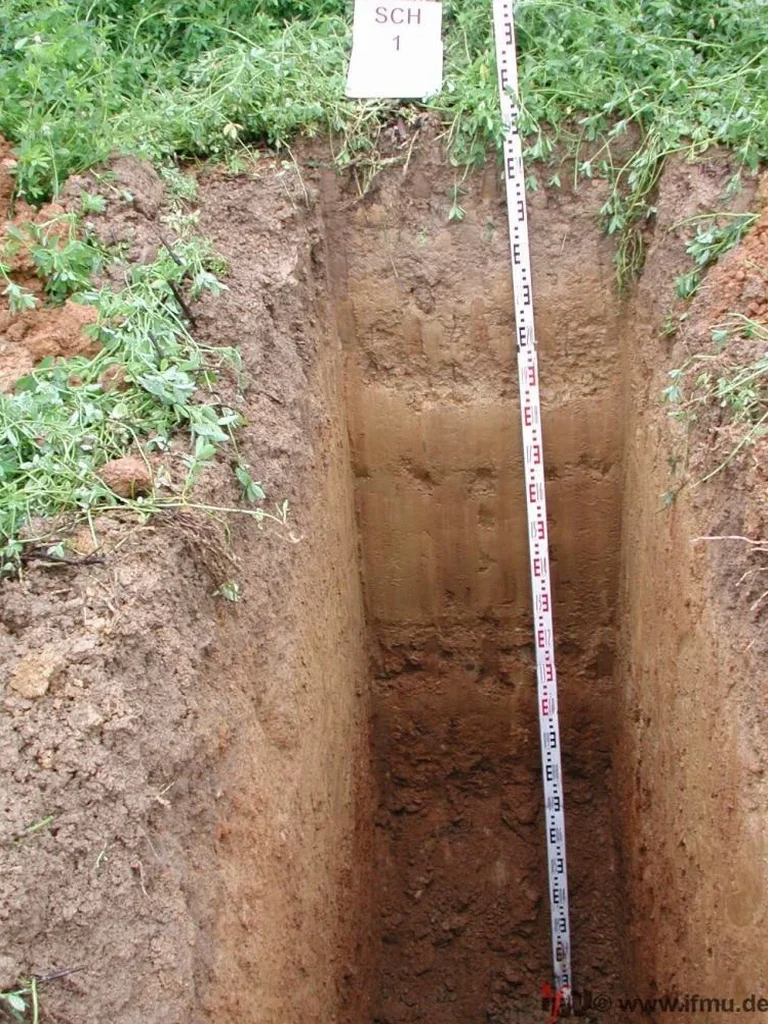
The Massachusetts State Building Code, based on IBC 2021, mandates thorough site characterization before any foundation work, and in a city built on as much made land as Boston, this requirement is more than just a formality. From the Back Bay to the Seaport District, centuries of filling have created a subsurface mosaic where natural marine clay sits alongside demolition debris, granite blocks, and old timber piles. An exploratory test pit provides the most direct method to see these materials in place, allowing the geotechnical engineer to log stratigraphy according to ASTM D2488 and select undisturbed samples for laboratory testing. Unlike drilling methods that recover disturbed cuttings, a test pit exposes a full vertical face of the excavation, revealing lensing, fill boundaries, and seepage patterns that borehole logs alone might misinterpret. In our experience across Greater Boston, this visual confirmation is often the decisive factor in planning dewatering systems or assessing the risk of differential settlement in mixed-fill profiles.

Seeing the actual contact between fill and natural soil in a test pit wall gives you a level of certainty that SPT blow counts alone cannot provide.

Process and scope

Boston's urban development history directly shapes what we find in the ground today. The original Shawmut Peninsula was expanded through massive filling operations starting in the 1800s, using everything from gravel and sand to coal ash and household refuse. When excavating a test pit in neighborhoods like Fort Point or along the Fort Point Channel, it is not unusual to encounter granite seawall remnants or brick foundations from 19th-century warehouses buried beneath modern pavement. Understanding this context is essential for interpreting the results of an exploratory test pit, as the transition between natural Boston blue clay and overlying fill can be irregular and highly variable over short distances. We often combine these visual observations with targeted grain size analysis to classify fine-grained fill layers and confirm their suitability as bearing strata or their need for removal and replacement under a compacted structural fill specification.
Exploratory Test Pits in Boston: Direct Soil Observation for Foundation Design
Technical reference image — Boston

Site-specific factors

The most common mistake we see in the Boston area is a contractor assuming that the fill across a site is uniform because two boreholes, spaced 100 feet apart, showed similar material. In the filled land of East Boston or along the Charles River Basin, a single buried foundation wall or an old timber crib structure can create an abrupt change in subgrade stiffness that a borehole might miss but a test pit will reveal directly. Relying solely on widely spaced drilling can lead to surprises during excavation: unanticipated obstructions that delay pile driving, or pockets of organic silt that settle differentially under a new slab. An exploratory test pit program allows us to physically trace these buried features across the site, verifying that the intended bearing surface is continuous and competent. This is particularly critical for shallow foundation designs and for confirming that the pre-construction soil compaction specifications will be achievable across the entire building footprint.

Need a geotechnical assessment?

Reply within 24h.

Email: contact@geotechnical-engineering.vip

Technical data

ParameterTypical value
Maximum Depth (Type C soil)Up to 15 ft with benching or shoring per OSHA 1926 Subpart P
Standard Width24 to 36 inches bucket width, depending on excavator reach
Soil Logging StandardASTM D2488 / D2487 visual-manual classification
Typical Duration4 to 8 hours per pit, including backfill and compaction
Groundwater ObservationSeepage rate and static level measured at time of excavation
Sample RetrievalBulk disturbed samples and hand-carved block samples from pit face
Safety ComplianceOSHA 1926.651/652, confined space entry protocol where applicable

Complementary services

01

Urban Test Pit Excavation

Small-track excavator access for tight Boston alleyways and basement excavations, with vacuum excavation pre-clearing around marked utilities. We handle street opening permits and pedestrian protection planning.

02

Geotechnical Logging and Sampling

Full stratigraphic column logging per ASTM D2488, with measurement of fill thickness, natural clay consistency, and groundwater seepage. Bulk and hand-carved block samples retrieved for laboratory testing.

03

Pavement and Subgrade Verification

Test pits positioned to confirm existing pavement section thicknesses and subgrade conditions for road widening or utility trench restoration, documented for compliance with Boston Public Works Department requirements.

Relevant standards

ASTM D2488-17e1: Standard Practice for Description and Identification of Soils (Visual-Manual Procedure), ASTM D2487-17: Standard Practice for Classification of Soils for Engineering Purposes (Unified Soil Classification System), OSHA 1926 Subpart P: Excavations and Trenching Safety Requirements, 780 CMR (Massachusetts State Building Code, 9th Edition, incorporating IBC 2021)

Questions and answers

How much does an exploratory test pit cost in Boston?

For a standard test pit up to 12 feet deep in typical Boston fill, with full logging, photography, and backfill compaction, the cost ranges from US$490 to US$950 per pit. The final price depends on access constraints, the need for street opening permits, utility pre-clearing with vacuum excavation, and the number of pits on the same mobilization.

What depth can you reach with a test pit in Boston's fill?

In Type C soils, which include most of Boston's granular fill and soft clay, OSHA allows vertical excavations to a maximum depth of 15 feet with proper benching or shoring in place. For deeper investigations, we typically transition to a CPT soil test to obtain continuous soil data without the safety constraints of an open excavation.

Do I need a permit to dig a test pit in the City of Boston?

Yes, if the test pit is located within the public right-of-way, you will need a street opening permit from the Boston Public Works Department. For pits on private property, no street permit is required, but we always coordinate with Dig Safe (811) for utility marking at least 72 hours before excavation, and we check for any site-specific environmental deed restrictions.

Can you identify old foundations and buried structures with test pits?

Absolutely. This is one of the primary advantages of the method in a city like Boston. A test pit exposes a continuous vertical face and horizontal floor, allowing us to directly observe granite block foundations, timber piles, brick arch sewers, and demolition debris layers that would be difficult to characterize from drill cuttings alone. We can then map the extent of these obstructions for foundation redesign or removal planning.
Location and service area

We serve projects across Boston and surrounding areas.

View larger map