← Home · Laboratory

Proctor Test Services in Boston: Standard and Modified Compaction Analysis

Together, we solve the challenges of tomorrow.

LEARN MORE →

Boston's subsurface is a geological patchwork of glacial till, outwash sands, and Boston blue clay, but most construction sites contend with a thick mantle of urban fill placed over the past three centuries. Much of that fill went in without any compaction control, which means any new engineered fill for foundations, roadways, or utility trenches has to be placed on a foundation of material that often settles unpredictably. We run both standard and modified Proctor tests to establish the compaction baseline that earthwork contractors need before a single lift of structural fill is placed. For sites near the Fort Point Channel or along the reclaimed land of Back Bay, understanding the relationship between moisture and density becomes even more critical, because the groundwater table sits barely two to three meters below street level and wet fill can fail a density test outright. Our lab provides the reference curve that field crews use to verify compaction with a nuclear gauge or sand cone density testing during construction.

A properly developed Proctor curve eliminates guesswork on compaction acceptance — it is the single reference point that converts field density readings into a pass or fail decision.

Process and scope

ASTM D698 and ASTM D1557 govern the standard and modified Proctor procedures respectively, and Massachusetts DEP often references these standards in its Solid Waste and Earthwork regulations for landfill closure and site remediation projects. The key difference between the two methods is compactive effort: standard Proctor uses a 5.5-pound hammer dropped 12 inches in three layers, while modified Proctor applies a 10-pound hammer dropped 18 inches in five layers, simulating the heavier rollers and vibratory compactors used on modern highway jobs. Boston's variable fill materials, which can contain everything from crushed brick to oyster shells in older neighborhoods like the North End, often require a modified Proctor to achieve densities that will support pavement sections designed per MassDOT specifications. We have found that grain size distribution strongly influences the compaction curve shape, particularly when cobbles and oversized particles have to be corrected using ASTM D4718 procedures, a scenario we encounter frequently on sites in Dorchester and Roxbury where demolition debris is mixed with natural soil.
Proctor Test Services in Boston: Standard and Modified Compaction Analysis
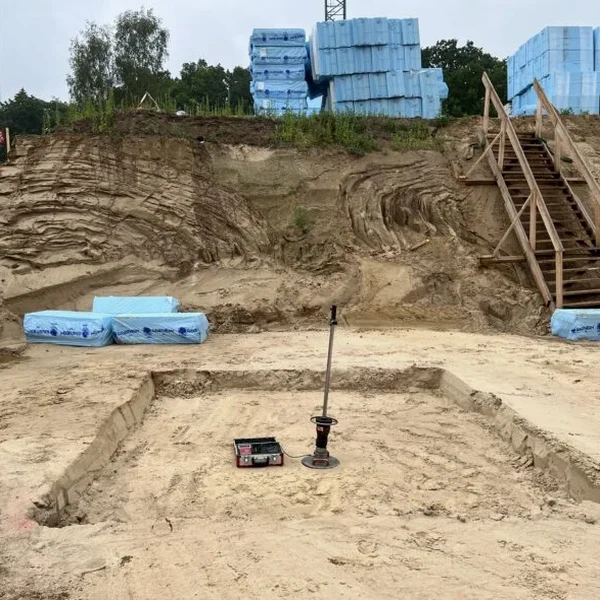
Technical reference image — Boston

Site-specific factors

Boston's construction season is compressed into roughly eight months before winter shutdowns begin, and a failed compaction test in November can delay a project until April if the ground freezes before the issue is resolved. The city sits at an elevation ranging from sea level to about 100 feet in the higher drumlin areas, and many low-lying neighborhoods including parts of South Boston and East Boston are built on fill that was never engineered to support the loads modern structures impose. When Proctor reference data is missing or derived from a borrow source that does not match the on-site material, the field density results become meaningless and the risk of differential settlement rises sharply. We have seen situations where imported fill passed a Proctor test at one moisture content but behaved completely differently after a nor'easter saturated the subgrade, underscoring why the compaction curve must reflect the actual range of moisture conditions the material will experience during placement and service.

Need a geotechnical assessment?

Reply within 24h.

Email: contact@geotechnical-engineering.vip

Technical data

ParameterTypical value
Test Standard (Standard Proctor)ASTM D698 / AASHTO T-99
Test Standard (Modified Proctor)ASTM D1557 / AASHTO T-180
Hammer Mass (Standard)5.5 lb (2.49 kg)
Hammer Mass (Modified)10 lb (4.54 kg)
Drop Height12 in (Standard) / 18 in (Modified)
Mold Volume Options1/30 ft³ (4-inch) or 1/13.33 ft³ (6-inch)
Oversize CorrectionASTM D4718 (retained on No. 4 / 3/4-inch sieve)
Typical Reporting Parametersγdmax, wopt, ZAV curve, compaction curve plot

Complementary services

01

Standard and Modified Proctor Laboratory Testing

We develop the full moisture-density relationship curve using the method specified in your project documents, whether that is ASTM D698 for building pads and landscape fills or ASTM D1557 for roadway subgrades and airfield pavements. Oversize corrections are applied when the material contains gravel or cobbles retained on the control sieve, and we report the zero-air-voids curve alongside the compaction curve to validate data quality.

02

Field Compaction Verification Support

Once the Proctor reference is established, our field team performs density testing using nuclear gauges or sand cone methods to confirm that placed lifts meet the specified percentage of maximum dry density. This integrated approach ensures that the lab curve and field measurements are directly comparable, reducing disputes between contractors and inspectors on projects throughout the Greater Boston area.

Relevant standards

ASTM D698-12(2021) — Standard Test Methods for Laboratory Compaction Characteristics of Soil Using Standard Effort, ASTM D1557-12(2021) — Standard Test Methods for Laboratory Compaction Characteristics of Soil Using Modified Effort, ASTM D4718-87(2007) — Standard Practice for Correction of Unit Weight and Water Content for Soils Containing Oversize Particles, MassDOT Standard Specifications Section 120 — Earthwork (referencing AASHTO T-99 and T-180)

Questions and answers

How much does a Proctor test cost in the Boston area?

A standard or modified Proctor test in our Boston laboratory typically ranges from US$110 to US$240, depending on whether the material requires oversize correction per ASTM D4718 and how many points are needed to define the compaction curve adequately. Materials with significant gravel content or those requiring multiple trial curves due to variable gradation fall toward the upper end of that range.

When should I use modified Proctor instead of standard Proctor?

Modified Proctor is the correct choice when the project specifications call for higher compaction energy, which is typical on MassDOT highway projects, commercial building pads designed for heavy floor loads, and any fill placement where vibratory rollers or large tamping-foot compactors will be used. Standard Proctor suits residential construction, landscaping fills, and trench backfill in non-structural areas where lighter compaction equipment is sufficient.

How long does a Proctor test take to complete?

A single-point Proctor determination can be completed in one working day if the material arrives in our lab by morning, but a full five-point curve with oversize correction typically requires 24 to 48 hours of laboratory time due to the drying, sieving, and multiple compaction cycles involved. We always recommend coordinating soil sampling at least three working days before compaction operations begin so the reference data is in hand when the first lift goes down.

Does Boston blue clay require a different compaction approach?

Boston blue clay is generally not used as engineered fill because its high plasticity and low permeability make moisture conditioning difficult and compaction unpredictable. When blue clay is encountered, it is typically undercut and replaced with granular borrow material that can be compacted reliably. We run Proctor tests on the replacement fill rather than on the native blue clay, which is more appropriately characterized through consolidation and triaxial testing for foundation design purposes.
Location and service area

We serve projects across Boston and surrounding areas.

View larger map