← Home · Foundations

Pile Foundation Design in Boston — Geotechnical Engineering for Deep Foundations

Together, we solve the challenges of tomorrow.

LEARN MORE →

Boston sits on a lot of made land. Over 5,000 acres of the city was once tidal flats and marsh, filled in during the 19th century. That fill now poses a direct challenge for any structure taller than two stories. Bearing capacity is uneven. Organic silt layers appear where the soil map says sand. The standard approach of shallow footings fails fast in these conditions. Pile foundation design becomes the only reliable path to transfer loads down to competent bearing strata. Our team works with local drillers who know the Boston Blue Clay and the glacial till beneath it. We combine IBC Chapter 18 requirements with in-situ permeability data when groundwater complicates the pile installation plan.

In Boston's filled land, the pile tip has to reach the glacial till. Stopping short means differential settlement within two years.

Process and scope

Boston winters freeze deep and spring brings a rising water table. That freeze-thaw cycle stresses pile caps and shafts in ways that dry climates never see. The design has to account for frost jacking on the upper 4 feet of the pile and lateral spreading in the Back Bay fill. We specify pile types based on the load path, not a catalog. Driven H-piles work well through the fill to refusal on till. Drilled shafts suit sites near the Zakim Bridge where vibration limits apply. Micropiles solve tight-access jobs in the North End. For projects near the waterfront, we correlate the design with a liquefaction assessment to check cyclic softening in the loose sand layers that sit above the clay. Every pile group layout is checked for group efficiency and settlement under the IBC service load combinations.
Pile Foundation Design in Boston — Geotechnical Engineering for Deep Foundations
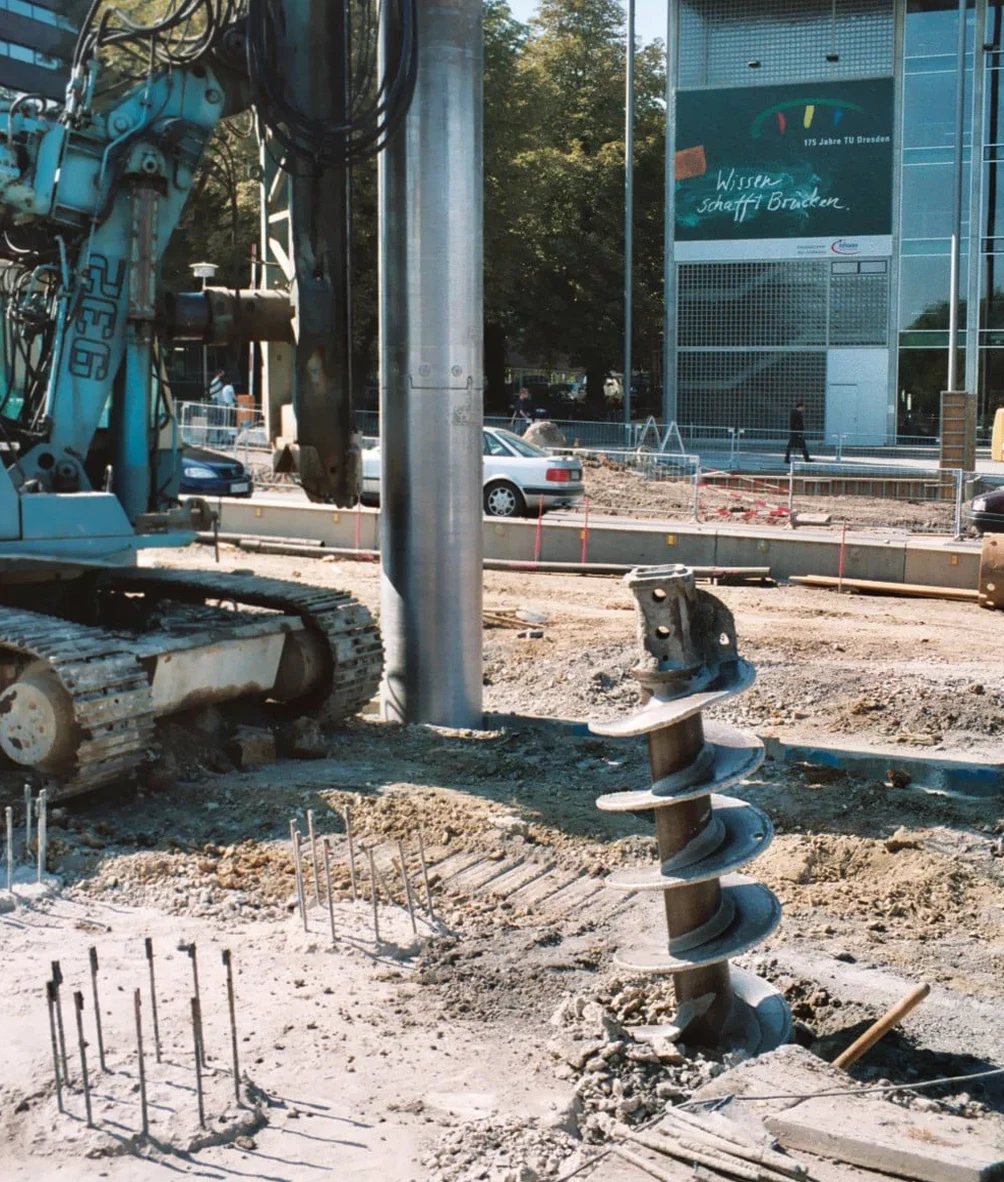
Technical reference image — Boston

Site-specific factors

The costliest mistake we see is driving piles to a fixed length without confirming tip elevation in the till. Boston's buried topography is a drumlin field. The till surface can drop 20 feet across a single building footprint. Piles that look identical on paper can have half the capacity if the tip sits in soft clay instead of dense till. Another common error is ignoring downdrag. The urban fill layer is still consolidating. That adds negative skin friction that eats away the pile's structural capacity over time. A proper geotechnical investigation logs the organic content and settlement potential of each layer before the pile design starts. Shortcuts here show up as cracks in the superstructure within the first five years.

Need a geotechnical assessment?

Reply within 24h.

Email: contact@geotechnical-engineering.vip

Technical data

ParameterTypical value
Design codeIBC 2021, ASCE 7-22
Typical pile typesDriven H-pile, drilled shaft, micropile, helical pile
Bearing stratumGlacial till, bedrock (Cambridge Argillite)
Lateral load analysisLPILE, GROUP, or FB-MultiPier
Settlement limit1 inch total, 0.5 inch differential per IBC
Corrosion protectionSacrificial steel thickness per AASHTO for fill soils
Dynamic testingPDA per ASTM D4945, CAPWAP analysis

Complementary services

01

Deep Foundation Design Package

Complete pile foundation design including geotechnical report review, axial and lateral capacity analysis, pile group layout, settlement prediction, and construction specifications. Suitable for new buildings, additions, and foundation replacements in all Boston neighborhoods.

02

Pile Load Test Program Management

Design and supervision of static load tests (ASTM D1143) and dynamic tests (ASTM D4945) to verify pile capacity. Includes instrumentation planning, data interpretation with CAPWAP, and final capacity sign-off for the Boston building permit record.

Relevant standards

IBC 2021 Chapter 18, ASCE 7-22, ASTM D1586-18, ASTM D2487, ASTM D1143

Questions and answers

What pile type works best in Boston's Back Bay fill?

Driven H-piles and drilled shafts are the two most common solutions. H-piles drive through the historic fill and organic silt to reach the glacial till. Drilled shafts are preferred near historic structures where vibration from driving is a concern. The final choice depends on the depth to till at your specific site.

How deep do piles need to go in the Boston area?

Pile tip elevation varies dramatically across the city. In the Back Bay, till is often 60 to 90 feet below street grade. In Beacon Hill or Roxbury, bedrock can be within 20 feet. A test boring program is the only way to determine the required pile length for your parcel.

What does pile foundation design cost for a Boston project?

Design fees for a typical Boston building project range from US$1,480 to US$6,500 depending on the number of piles, the complexity of the soil profile, and the required testing program. A detailed proposal follows the initial site review.

How long does the pile design and review process take with the Boston building department?

Design production takes 2 to 3 weeks after geotechnical data is complete. The Boston Inspectional Services Department (ISD) review for the foundation permit typically adds 3 to 4 weeks. We handle the technical responses to any review comments.
Location and service area

We serve projects across Boston and surrounding areas.

View larger map