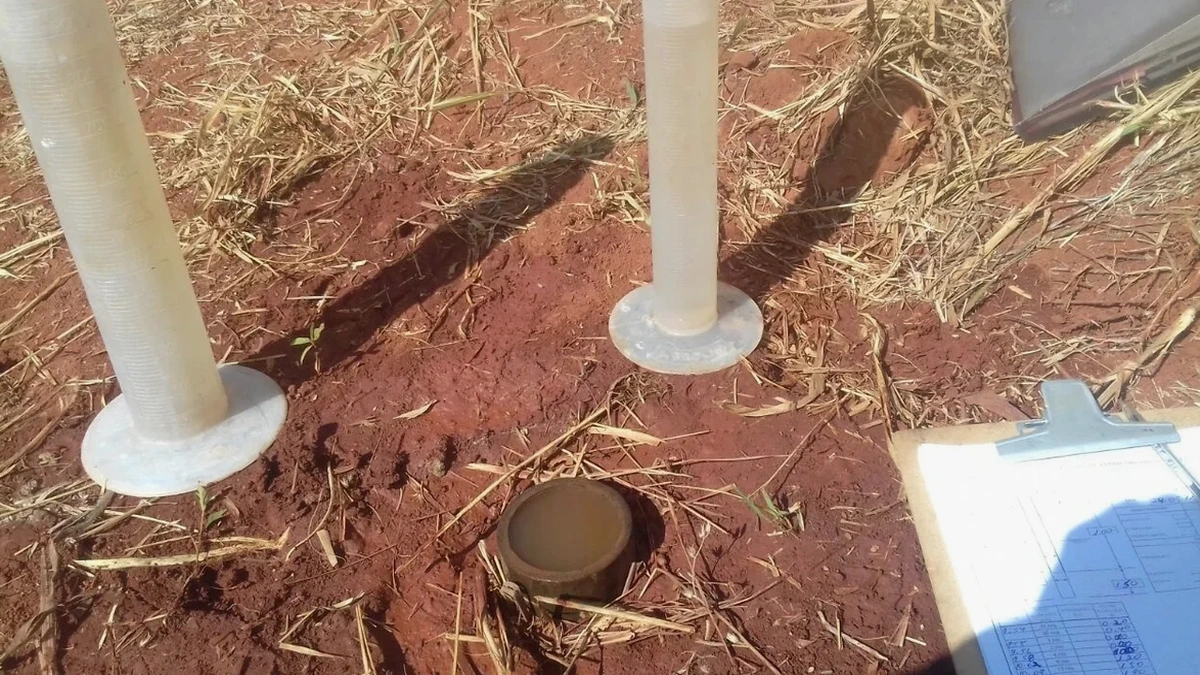
In the Back Bay, we see high groundwater levels perched on artificial fill. South Boston sits on thick Boston Blue Clay. The hydraulic contrast between these neighborhoods is extreme, and guessing the permeability coefficient is a costly mistake. A test pit can expose the soil profile visually, but it tells you nothing about how water moves through it. That is where the Lefranc test enters the picture. For bedrock, like the Cambridge Argillite found in the Seaport district, the Lugeon test becomes essential. The team runs these in-situ tests following ASTM D6391 to provide real permeability data for dewatering system design and basement waterproofing strategies.
A Lugeon value above 5 in Cambridge Argillite signals an open fracture network that can flood a deep excavation in minutes.
Questions and answers
What is the difference between the Lefranc and Lugeon tests?
The Lefranc test measures hydraulic conductivity in soil by introducing water into a borehole section under a constant or falling head. The Lugeon test applies water under pressure in fractured rock to assess joint permeability. We use Lefranc for overburden and Lugeon for bedrock.
How much does a field permeability test cost in Boston?
The cost for a Lefranc or Lugeon test program typically ranges from US$610 to US$980 per test interval, depending on depth, number of stages, and mobilization requirements within the greater Boston area.
Why is the Lugeon test done in five pressure stages?
The five-stage sequence (low, medium, high, medium, high) reveals how the rock fracture network behaves under pressure. A steady increase in flow indicates laminar flow. A sharp jump at high pressure suggests fracture dilation or washout, which affects the grouting strategy.
Can you test permeability in Boston Blue Clay?
Yes. While the intact clay has very low hydraulic conductivity, we test the weathered crust and any silt or sand seams within the clay. A Lefranc test in these zones provides critical data for estimating leakage into deep excavations.