Boston's subsurface is a layered record of glacial advance and retreat. Beneath the fill of Back Bay and the clays of the Fort Point Channel, bearing strata often sit 30 to 80 feet down. This stratigraphy governs deep foundation decisions, but where total and differential settlement control is critical, a rigid mat foundation can bridge these compressible zones. We integrate site-specific boring logs with CPT soundings to map the thickness of the Boston blue clay, a notorious marine deposit with undrained shear strengths sometimes below 500 psf. When organics or urban fill exceed six feet, the raft design must account for long-term consolidation under the structure's footprint. For perimeter stability in cut-and-cover conditions, we coordinate the slab geometry with deep excavation support to limit lateral displacement in adjacent historic foundations.
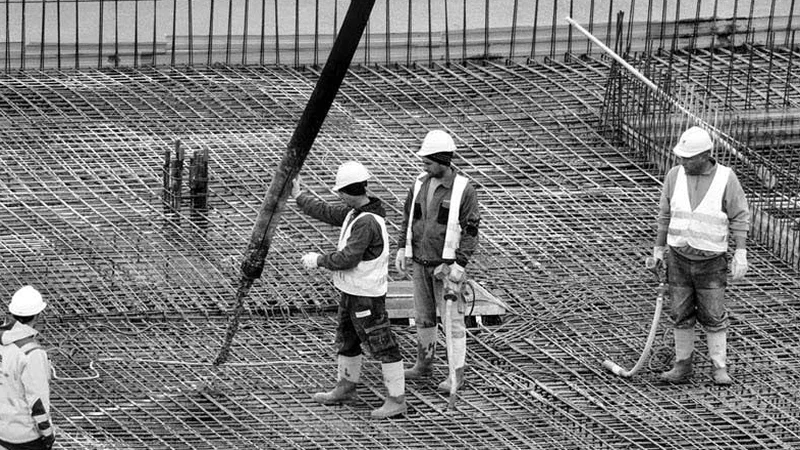
A properly designed mat foundation in Boston's clay converts differential settlement into controlled rigid-body rotation.
Questions and answers
What is the typical cost range for a raft foundation design in the Boston area?
Engineering fees for a complete raft or mat foundation design package typically range from US$990 to US$4,250, depending on the building footprint, number of column loads, and the complexity of the subsurface conditions. This covers the geotechnical report, soil-structure interaction modeling, structural mat design, and construction-ready drawings.
The Boston Groundwater Conservation Ordinance requires maintaining groundwater levels in filled land districts. For mat foundations, this means the bottom of the mat must often be set above the historic groundwater table or a recharge system must be incorporated to prevent lowering the water level during and after construction.
The reference range for this service in Boston is US$990 - US$4.250. The final price depends on the project scope and volume.
Can a mat foundation be designed on Boston blue clay without piles?
Yes, if the clay is sufficiently overconsolidated and the building loads are moderate. The key is limiting total settlement to under two inches and angular distortion to less than 1/500. We evaluate this by comparing the preconsolidation pressure from oedometer tests to the net stress increase at the clay surface, ensuring the clay stays in the recompression range.