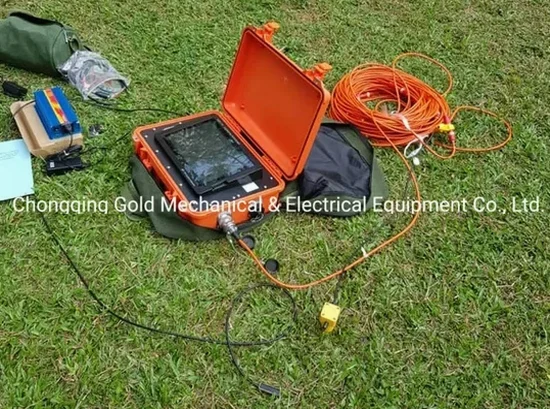
ASCE 7-22 and the Massachusetts State Building Code demand site-specific shear wave velocity data for Seismic Site Class determination, and in Boston that data is rarely straightforward. Glacial till overlies argillite bedrock across much of the city, but the contact is irregular. Buried valleys cut through the till in Back Bay and along the Charles, filled with compressible organic silts and marine clays that mask the true bedrock depth. Standard drilling tells you what happens at one point. Seismic tomography fills the gaps between boreholes, mapping velocity contrasts across the entire site in two dimensions. When an IBC Chapter 16 analysis requires Vs30 and a bedrock depth profile for a mid-rise in the Seaport, we run both refraction and reflection lines to constrain the model from surface to refusal. For deeper targets or sites with suspected karst features in the Cambridge argillite, combining tomography with resistivity profiling helps separate water-filled voids from competent rock. On tight urban lots where access limits the array length, we often supplement with a MASW survey to extract a 1D Vs profile at the borehole location and tie it to the tomogram.
Refraction gives you the velocity model. Reflection gives you the geometry. In Boston's glacial terrain, you really need both to map the bedrock surface reliably.
Site-specific factors
A developer in the Fenway area planned a six-story residential building on what the historical maps showed as filled marshland. Three borings hit refusal at 45 feet on what drillers logged as bedrock. The seismic refraction survey told a different story. Velocity increased smoothly to 45 feet, then dropped abruptly before rising again at 65 feet. That low-velocity zone was a buried organic silt lens sitting right on top of the till. The drillers had stopped in a boulder, not bedrock. Had the foundation design proceeded with a 45-foot bearing depth, differential settlement across the silt lens would have been inevitable. We see this pattern regularly across the Back Bay and Fenway neighborhoods. The combination of glacial erratics, buried peat channels, and a highly irregular bedrock surface makes single-point exploration methods risky. Seismic tomography is not a replacement for drilling. It is the tool that shows you where to drill and what the drill is actually cutting through.
Questions and answers
What is the typical cost range for a seismic tomography survey in Boston?
For a typical site investigation involving one or two refraction lines with a 24-channel array and sledgehammer source, the cost generally ranges from US$2,420 to US$5,210 depending on line length, number of spreads, and whether reflection processing is also required.
What does a seismic tomography survey actually measure?
It measures the travel time of seismic waves from a surface source to an array of geophones. Refraction tomography models the compressional (P-wave) or shear (S-wave) velocity structure of the subsurface. Reflection surveys image acoustic impedance contrasts at layer boundaries. Together they provide a cross-sectional velocity and geometry model used for site class determination and foundation design.
Can seismic tomography replace borings on a Boston site?
No. Tomography provides continuous spatial coverage between boreholes, but it does not recover samples for laboratory testing. The velocity model must be calibrated against lithology from at least one boring. The most reliable site characterization strategy combines targeted borings with seismic lines running between them, so the velocity boundaries are tied to actual soil and rock types.